ing has become a necessity for businesses of all sizes.Digital marketing whether you’re a small business owner, a marketing professional, or someone curious about how companies grow online, understanding online marketing is essential.
Table of Contents
In this comprehensive guide, we’ll explore what digital marketing is, why it’s important, the most effective strategies in 2025, and how you can start implementing it successfully.
What is Digital Marketing?
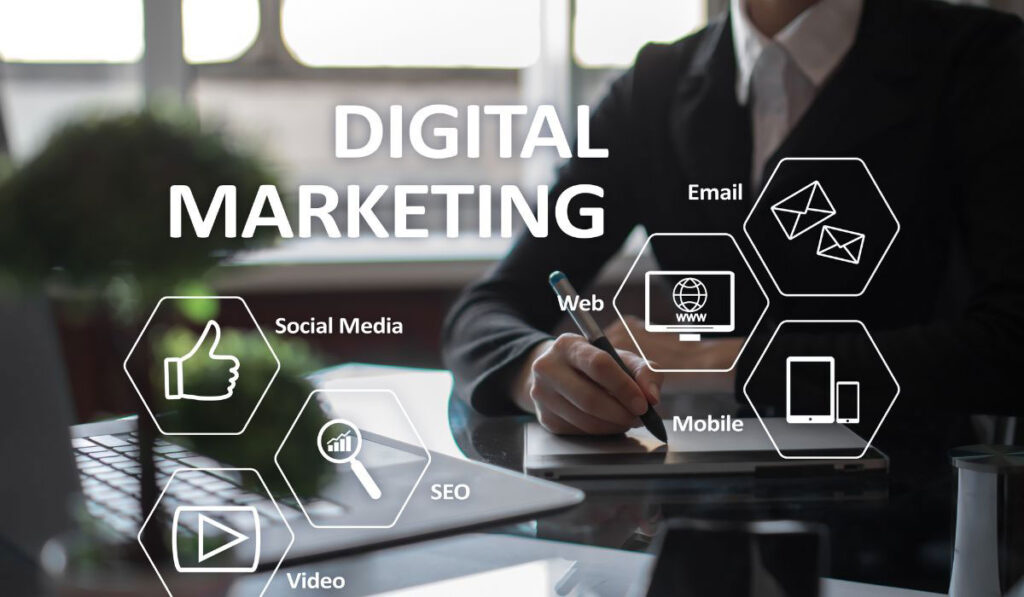
Digital marketing refers to the promotion of products or services using digital channels such as:
- Search engines (like Google)
- Social media platforms (Facebook, Instagram, LinkedIn, etc.)
- Email marketing
- Content marketing
- Affiliate and influencer marketing
- Websites and mobile apps
Unlike traditional marketing (TV, radio, newspapers), digital marketing allows businesses to track performance in real-time, target specific audiences, and achieve a high return on investment (ROI).
Why Digital Marketing Matters in 2025
In 2025, the digital landscape is more competitive than ever. Businesses that adapt to new trends and invest in digital marketing are outperforming those that stick to outdated methods.
Here’s why digital marketing is crucial:
- Massive Online Presence: Over 5 billion people use the internet daily. Your customers are online—your business should be too.
- Data-Driven Decisions: Digital platforms offer insights that help businesses fine-tune their strategies.
- Cost-Effective: Compared to traditional ads, digital campaigns can reach a wider audience at a fraction of the cost.
- 24/7 Availability: Your digital content works for you even while you’re asleep.
- Customer Engagement: Social media and email allow two-way communication and build relationships.
Core Components of Digital Marketing
To build a strong digital marketing strategy, focus on the following pillars:
1. Search Engine Optimization (SEO)
SEO is the process of optimizing your website to rank higher on Google and other search engines. It involves:
- Keyword research
- On-page SEO (titles, meta tags, headers)
- Technical SEO (website speed, mobile-friendliness)
- Off-page SEO (backlinks from reputable sites)
- Content creation
Goal: Drive organic (unpaid) traffic to your site.
2. Content Marketing
“Content is king” still holds true. Content marketing includes blog posts, videos, infographics, podcasts, and more. The key is creating valuable, relevant content that solves problems or entertains.
Benefits:
- Builds trust and authority
- Improves SEO rankings
- Educates and nurtures your audience
3. Social Media Marketing
Platforms like Facebook, Instagram, TikTok, LinkedIn, and X (formerly Twitter) are essential for brand awareness and customer engagement.
In 2025, trends include:
- Short-form video content
- Influencer partnerships
- AI-powered personalization
- Community building
Tip: Each platform has a unique audience—adapt your content accordingly.
4. Email Marketing
Email is one of the highest ROI digital marketing tools. It allows you to:
- Nurture leads
- Promote products or services
- Announce news and events
- Segment audiences for better targeting
Pro Tip: Personalization and automation are key for successful email campaigns.
5. Pay-Per-Click Advertising (PPC)
PPC is a paid method where advertisers pay each time a user clicks on their ad. Google Ads, Facebook Ads, and Instagram Ads are popular platforms.
Advantages:
- Immediate traffic
- Highly targeted
- Easy to scale
Budgeting tip: Start small, test, and scale what works.
6. Affiliate & Influencer Marketing
Affiliate marketing involves paying others (affiliates) a commission for referring customers. Influencer marketing uses individuals with online followings to promote your brand.
2025 Trends:
- Micro-influencers with niche audiences
- Authentic, non-scripted content
- Performance-based contracts
Emerging Digital Marketing Trends in 2025
To stay competitive, businesses must adapt to changing technologies and consumer behaviors. Here are the top trends shaping digital marketing in 2025:
✅ Artificial Intelligence (AI) and Machine Learning
AI powers chatbots, content creation, predictive analytics, and personalized marketing. Tools like ChatGPT, Jasper, and Midjourney are helping marketers automate and innovate.
✅ Voice Search Optimization
With smart speakers and voice assistants becoming more common, optimizing for voice search is crucial. Use conversational keywords and FAQs.
✅ Video Marketing Dominance
Short-form videos (like TikToks, YouTube Shorts, and Instagram Reels) continue to dominate. Video marketing increases engagement and conversions.
✅ Privacy & Data Protection
With stricter regulations (like GDPR and CCPA), marketers must prioritize data privacy. First-party data collection and transparent consent practices are key.
✅ Omnichannel Marketing
Customers expect a seamless experience across platforms. An integrated strategy combining social, email, SEO, and offline touchpoints works best.
How to Create a Digital Marketing Strategy
Here’s a step-by-step approach to building a digital marketing plan:
Step 1: Define Your Goals
- Increase website traffic?
- Generate leads?
- Improve brand awareness?
- Boost sales?
SMART goals (Specific, Measurable, Achievable, Relevant, Time-bound) help guide your efforts.
Step 2: Know Your Audience
Create customer personas based on:
- Age, gender, income
- Interests and habits
- Pain points and goals
- Preferred platforms
Step 3: Choose the Right Channels
Not every business needs to be everywhere. Pick platforms that align with your audience and goals.
Step 4: Develop Compelling Content
Create valuable content tailored to each stage of the buyer’s journey:
- Awareness: Blog posts, infographics
- Consideration: Case studies, comparison guides
- Decision: Demos, testimonials, promotions
Step 5: Measure and Optimize
Use tools like Google Analytics, Meta Ads Manager, and email dashboards to track KPIs:
- Traffic
- Conversion rate
- Cost per lead/sale
- Engagement
Refine your campaigns based on performance data.
Digital Marketing Tools You Should Know
Here are some top tools to streamline your digital marketing efforts:
| Area | Tools |
|---|---|
| SEO | Ahrefs, SEMrush, Ubersuggest |
| Email Marketing | Mailchimp, ConvertKit, ActiveCampaign |
| Social Media | Hootsuite, Buffer, Later |
| Analytics | Google Analytics, Hotjar, Microsoft Clarity |
| Design & Video | Canva, Adobe Express, CapCut |
| AI Tools | ChatGPT, Jasper, Surfer SEO, Copy.ai |
Final Thoughts
Digital marketing is not a one-size-fits-all solution. It’s a dynamic and evolving landscape that requires creativity, data analysis, and constant learning.
Whether you’re just starting or looking to scale, focus on building trust, offering value, and staying up to date with trends. The businesses that invest in digital marketing today are the ones that will dominate tomorrow.
Start Your Digital Marketing Journey Today
If you’re ready to take your business to the next level:
- Audit your current digital presence.
- Identify your audience and set SMART goals.
- Choose 2–3 core strategies to focus on.
- Create a 3-month action plan.
- Monitor results and adjust as needed.
Digital marketing is the present and the future of business. Embrace it, master it, and watch your brand grow.
Would you like this formatted for WordPress, turned into a PDF, or adapted for a social media post series?
Latest post
if you have any query you can contact us. Click here